
Workplace stressors (uncertainty, complexity, rapid change, and the long-lasting ramifications of the COVID-19 pandemic and “lifestyle diseases” (e.g., poor nutrition, inactivity, excessive alcohol use, smoking and lack of work /life balance) place enormous burdens on individuals, their families, the workplace, and society.
For the individual these range from a decreased quality of life to disability and even premature death.
From an work and organisational perspective, they lead to increases in illness related absenteeism, reduction in productivity and performance while at work (presenteeism), increase in health care/medical costs, and higher employee turnover.
This has highlighted the importance of workplace wellness, with smart and forward-thinking organisations increasingly adopting workplace wellness programmes, Workplace wellness, which is also known as employee wellness and corporate wellness, concerns organisational policy promoting health-related behaviour and disease management at work, to improve overall health outcomes. These programs are said to be beneficial for the individual personally and at work, and for the organisation (reduced costs, less absenteeism, higher productivity, lowered tenure etc.). This ultimately affects positive organisational outcomes.
These programmes are deemed so important that they are no longer seen as "a nice to have', but rather "a need to have" if organisations want to attract and retain high-performing talent, achieve their objectives and flourish.
The World Health Organization (WHO), as early as 1947, defined health in terms of wellness as “physical, mental, and social well-being, not merely the absence of disease” (WHO, 1958, p. 1) and later provided a definition of optimal health as “a state of complete physical, mental, and social well-being and not merely the absence of disease or infirmity” (WHO, 1964, p. 1). Dunn (1961) who is widely credited as the “architect” of the modern wellness movement, described wellness as “an integrated method of functioning which is oriented toward maximizing the potential of which the individual is capable” (p. 4).
What the above definitions tell us, is that wellness typically embodies the concept of holistic health. All of the different parts of one's life need to be in 'good health' , so to speak, for wellness to flourish.
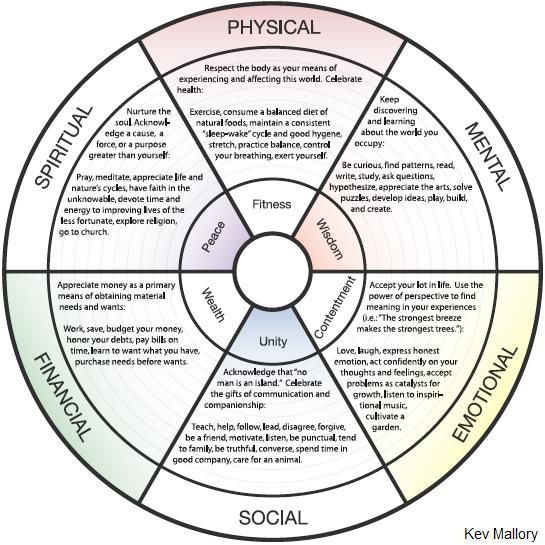
Numerous Wellness models have been put forward. Sweeney and Witmer (1991), Witmer and Sweeney (1992), and Myers et al. (2000) proposed the below (as depicted by Kev Mallory) holistic model of wellness and prevention over the life span:
With regards to wellness in the workplace, elements that benefit from consideration are work-life balance, health and safety, employee growth and development, employee recognition and employee involvement.
Wellness policy can include changes in after-hours work policy, the adoption of hybrid workplaces and four day work weeks, the promotion of stress management, exercise and healthy eating (primary prevention), and education on health (e.g., smoking or AIDS (secondary prevention). Volunteering for a cause has also proven beneficial.
Corporate Social Responsibility (CSR) is an important way for employers to give employees the opportunity to give back to communities and support the causes they believe in. Many younger workers these days feel a sense of responsibility to be a positive force in the world in one way or another. Offering employees opportunities to contribute to causes they believe in can add additional meaning to the work they do. When undertaken in the workplace, CSR efforts can also serve a team-building function.
Nature tourism and environmental volunteering trips are recent organisational undertakings that are increasingly being implemented. Recycling and energy-saving measures have the double bonus of saving companies money while keeping employees happy.
Musculoskeletal health concerns the health of employees'’ bones, joints and muscles. Health studies condemn the constant sedentary behavior found in most offices, saying "sitting is the new smoking," but "at least smokers got up from their desks (frequently)". Wellness programs that focus on preventing the negative health consequences of sitting for 40 hours a week are therefore gaining prominence. This includes health and wellness portals, standing desks and back braces which reduce the risk of injury and chronic conditions from sitting (with poor posture) for too long, and fitness apps and wearables which send gentle reminders to get up and move every hour. Many of these apps can be used for internal competitions or goal setting to boost engagement and team building. Wellness programs can also include remote sessions with physical therapists working one on one to reduce pain and improve musculoskeletal health.
The mental health of employees has gained increasing prominence, with widespread acknowledgment that it is an area in need of major improvement. Currently (and fortunately) it is enjoying its time in the workplace spotlight. Physical outcomes of constant mental stress include high blood pressure, weakened immune systems and ulcers to name a few. Stress and overwork also leads to burnout, which can cause high employee turnover if not properly managed. Stress and its side-effects are also recognized as a significant productivity “killers”, Savvy organisations have responded to this mental health dilemma by expanding health benefits that give workers access to therapists and other specialists. Some provide mindfulness courses and in-person wellness coaching and have re-thought time-off benefits, workspaces, workplaces (i.e. the increase in remote and hybrid work arrangements), modes of communication, and other factors that can improve mental wellness. Since the younger generations of employees recognize the importance of taking care of their personal mental health, demands for better mental health benefits are not going to go away. Organisations that accept this and adapt accordingly will reap the benefits in a multitude of ways.
NOTE: a ClassPass survey found that 88% of employee respondents said they’d be more likely to recommend employers that support their mental health.